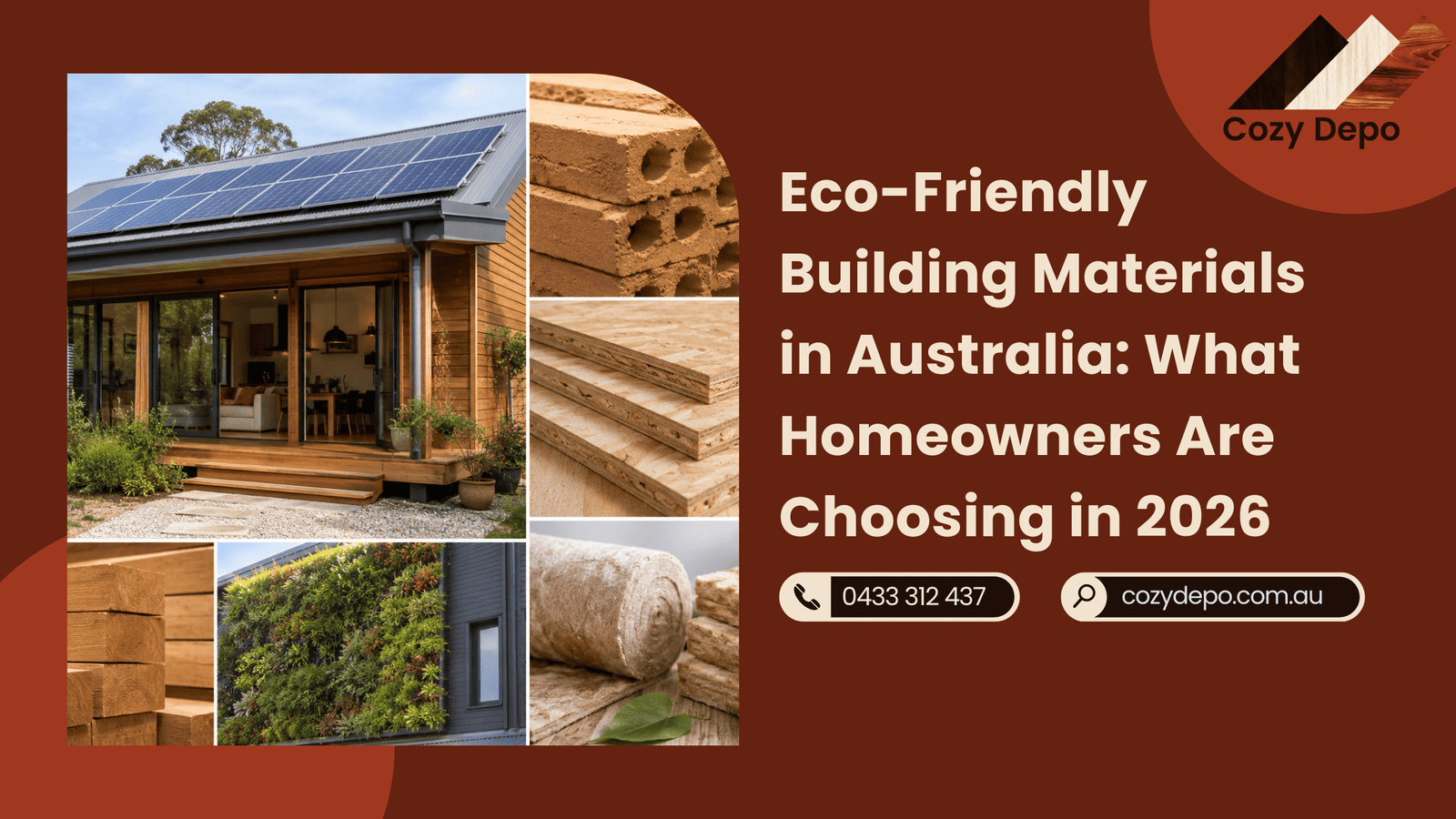
Sustainability is no longer just a trend in Australia. In 2026, it has become one of the biggest priorities for homeowners, builders, and renovators. More Australians are now choosing eco-friendly building materials that reduce environmental impact while also improving durability, energy efficiency, and long-term savings.
From low-maintenance cladding to recycled composite decking, modern homes are being designed with smarter and more sustainable materials than ever before.
If you are planning a renovation or a new build, understanding which sustainable materials are gaining popularity can help you make better choices for your home and the environment.
Why Eco-Friendly Building Materials Are Growing in Australia
Australian homeowners are becoming more conscious about:
- Rising energy costs
- Long-term maintenance expenses
- Environmental impact
- Material durability in harsh weather conditions
As a result, many people now prefer materials that:
- Last longer
- Require less maintenance
- Improve insulation and energy efficiency
- Use recycled or sustainable resources
Modern sustainable building products are no longer limited to basic designs. Today’s eco-friendly materials combine functionality, durability, and modern aesthetics.
Top Eco-Friendly Building Materials Australians Are Choosing in 2026
1. Composite Decking
Composite decking continues to grow in popularity across Australia because it offers the look of timber without the high maintenance.
Made using recycled wood fibres and plastic materials, composite decking helps reduce timber waste while delivering excellent durability.
Homeowners prefer composite decking because it:
- Resists moisture and termites
- Requires minimal maintenance
- Lasts longer than traditional timber
- Handles Australian weather conditions well
Many modern outdoor projects now focus on sustainable decking solutions that combine appearance with long-term performance.
2. Recycled Timber
Reclaimed and recycled timber remains a popular option for eco-conscious homeowners.
Instead of cutting new trees, recycled timber gives old wood a second life in:
- Flooring
- Feature walls
- Furniture
- Outdoor structures
It also adds natural warmth and character that many homeowners still love in modern interiors.
3. Fibre Cement Cladding
Fibre cement cladding is becoming a preferred alternative to traditional materials because of its durability and low maintenance.
Benefits include:
- Fire resistance
- Moisture resistance
- Long lifespan
- Better thermal performance
Many Australian homes now use fibre cement for both residential and commercial exteriors because it performs well in changing weather conditions.
4. Bamboo Building Materials
Bamboo is one of the fastest-growing sustainable materials available today.
It is commonly used for:
- Flooring
- Decorative panels
- Furniture
- Interior wall finishes
Bamboo grows much faster than traditional hardwood, making it a renewable and environmentally friendly choice.
5. Recycled Steel
Steel is highly recyclable, making it a sustainable option for modern construction projects.
Australian builders use recycled steel for:
- Structural framing
- Roofing
- Cladding systems
It is durable, strong, and performs well in extreme weather conditions.
6. Low VOC Paints and Finishes
Indoor air quality is becoming more important in modern Australian homes.
Low VOC paints reduce harmful chemical emissions and create healthier indoor environments.
These paints are now widely used because they:
- Improve indoor air quality
- Reduce odours
- Support healthier living spaces
They are especially popular in family homes and commercial interiors.
7. Sustainable Wall Cladding Solutions
Modern wall cladding materials are now designed to improve insulation and reduce maintenance while offering a stylish appearance.
Popular sustainable cladding options include:
- Composite cladding
- Recycled timber cladding
- Fibre cement panels
- Aluminium cladding systems
These materials help improve energy efficiency and reduce long-term maintenance costs.
Why Homeowners Prefer Low-Maintenance Sustainable Materials
One major reason eco-friendly products are becoming popular is because they require less maintenance compared to traditional materials.
Homeowners today want:
- Less repainting
- Fewer repairs
- Better weather resistance
- Longer product lifespan
This shift is driving demand for modern building materials that offer both sustainability and convenience.
Sustainable Outdoor Living is Growing in Australia
Outdoor living spaces are becoming a key focus in Australian home design.
Homeowners are investing in:
- Sustainable decking
- Outdoor wall cladding
- Energy-efficient landscaping
- Weather-resistant outdoor materials
Modern outdoor spaces are now designed to look stylish while also reducing maintenance and environmental impact.
Interestingly, many renovation trends now also focus on styling composite wood decking to create modern entertainment areas that combine sustainability with premium design.
Benefits of Eco-Friendly Building Materials
Choosing sustainable building materials offers several long-term advantages.
Lower Maintenance Costs
Durable materials reduce ongoing repair and maintenance expenses.
Better Energy Efficiency
Many sustainable materials improve insulation and help reduce heating and cooling costs.
Improved Property Value
Eco-friendly homes are becoming more attractive to modern buyers.
Environmental Benefits
Using recycled and renewable materials helps reduce landfill waste and resource consumption.
Cost of Sustainable Building Materials in Australia
Eco-friendly materials can sometimes have higher upfront costs, but they often provide better long-term value.
General estimates in 2026:
- Composite decking: $100 to $220 per sqm
- Fibre cement cladding: $90 to $180 per sqm
- Sustainable timber: Varies depending on source
- Aluminium cladding: $120 to $250 per sqm
Note: Prices may vary depending on product quality, installation requirements, and project size. It is always best to request a customised quote for accurate pricing.
How to Choose the Right Eco-Friendly Materials
Before selecting materials for your project, consider:
- Climate conditions
- Maintenance requirements
- Product lifespan
- Energy efficiency
- Design style
- Budget
Choosing the right balance between sustainability and practicality is important for long-term performance.
Why Sustainable Building is the Future in Australia
Australian homeowners are becoming more aware of how building materials impact:
- Energy consumption
- Maintenance costs
- Property value
- Environmental sustainability
As technology improves, eco-friendly materials are becoming more affordable, stylish, and accessible for everyday homes.
This is why sustainable construction is expected to continue growing strongly across Australia in the coming years.
Why Choose Cozy Depo for Modern Building Materials
Cozy Depo offers modern interior and exterior building materials designed for Australian homes and commercial projects.
Here’s what makes Cozy Depo stand out:
- Durable and low-maintenance products
- Modern cladding and decking solutions
- Products suited for Australian conditions
- Competitive pricing
- Expert local support
Whether you are planning a renovation or a new build, Cozy Depo provides stylish and practical solutions built for long-term performance.
FAQs About Eco-Friendly Building Materials
What are eco-friendly building materials?
Eco-friendly materials are sustainable products designed to reduce environmental impact while improving durability and energy efficiency.
Is composite decking environmentally friendly?
Yes, many composite decking products use recycled materials and require less maintenance than traditional timber.
What is the most durable exterior cladding option?
Composite cladding, fibre cement, and aluminium cladding are among the most durable low-maintenance options available in Australia.
Are sustainable materials more expensive?
Some materials may have a higher upfront cost, but they often reduce maintenance and replacement expenses over time.
Why are Australian homeowners choosing sustainable materials?
Homeowners want products that last longer, reduce maintenance, improve energy efficiency, and support environmentally responsible living.
Final Thoughts
Eco-friendly building materials are shaping the future of Australian homes in 2026. Homeowners are no longer choosing products based only on appearance. Durability, sustainability, energy efficiency, and maintenance now play a major role in decision-making.
From composite decking to modern cladding systems, sustainable materials are helping Australians create homes that look better, last longer, and perform more efficiently.
If you are planning your next renovation or construction project, choosing the right eco-friendly materials can provide long-term value for both your property and the environment.