Spring has landed. September brings longer days, softer weather and that sudden urge to fix everything outside your home. The patio wall that looked fine in winter now looks tired.
If an outdoor refresh is on your list, external WPC cladding is worth a look. Talking to trusted external wall cladding suppliers early in spring gives you time to plan materials, book an installer and finish before the summer heat.
So, is September really the best time? For many homeowners, yes. Here’s why it is the best time to install.
Why Is September a Good Time for External WPC Cladding?
Spring sits neatly between chilly winter and hot summer. Outdoor work feels easier for you and for the installer.
Here’s what helps:
- Milder weather
- Longer daylight
- Easier bookings
- Summer-ready spaces
- Time for landscaping
There’s a practical reason too. WPC boards expand slightly in heat and shrink in the cold. Installing in mild weather makes it easier to leave the right gaps between boards. Always follow the manufacturer’s guide.
Say you’re planning a barbeque for early December. Cladding in September leaves plenty of buffer for delays, weather and colour changes.
How Do Wall Cladding Suppliers for External Help With Spring Planning?
Good wall cladding suppliers do more than sell boards. They help you avoid guesswork. Ask each one about warranty, stock and installation guidance. Clear answers are a good sign.
Before you order, work out:
- Total wall area
- Wall condition
- Extra material for cuts
- Fixing and framing needs
- Local approval rules
Ordering late causes headaches. Popular colours can sell out, and delivery times can stretch as summer gets closer. If you want the job done by November, start the conversation in September.
What Makes WPC Cladding Useful for Outdoor Makeovers?
WPC stands for wood plastic composite. It consists of wood fibres mixed with polymers and is meant for outdoor use.
1. A Fresh, Modern Look
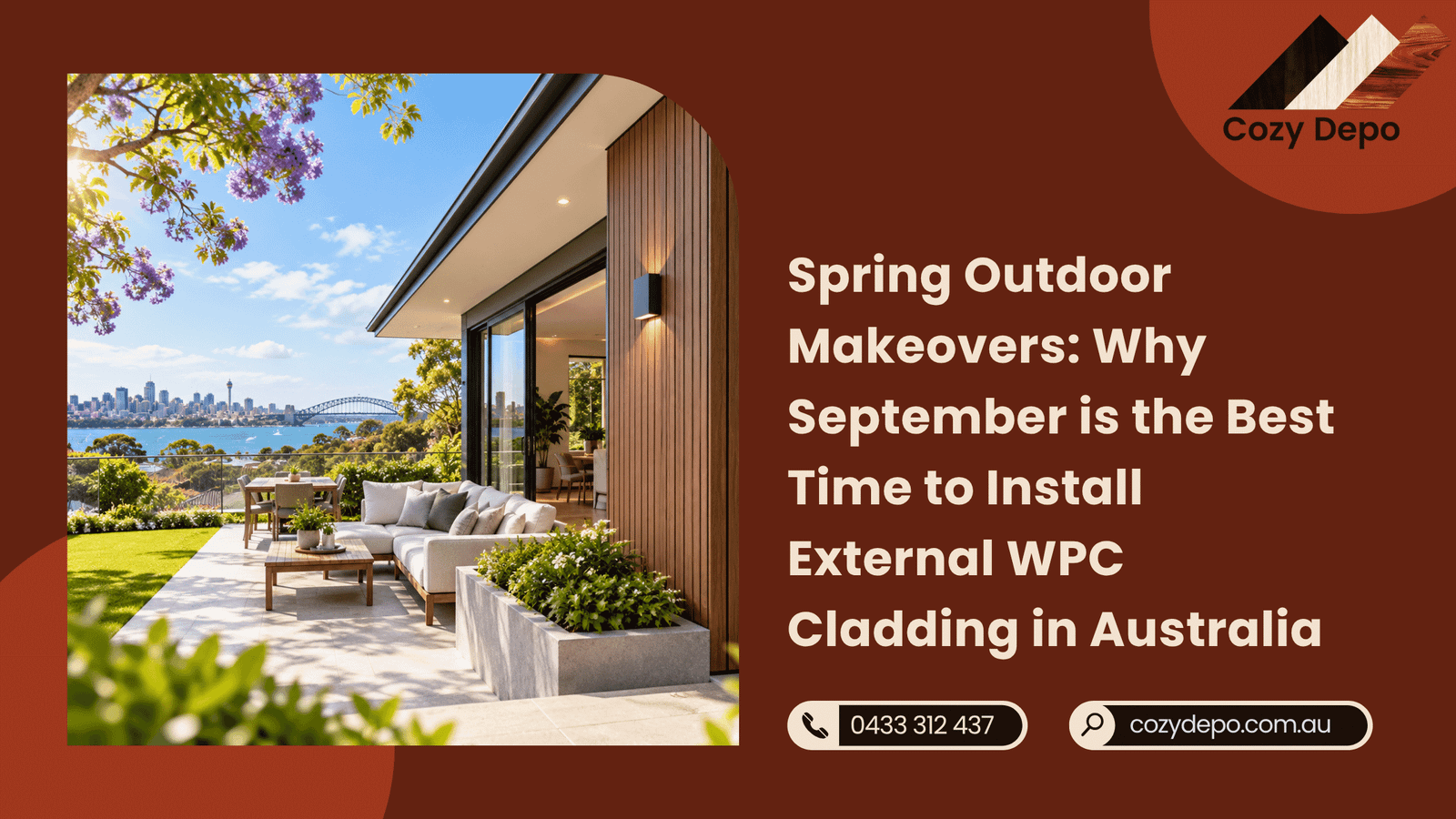
WPC can turn a plain exterior wall into a feature. Picture the blank wall behind your barbeque area. Cladding one section gives the space a proper backdrop.
2. Fits Your Wider Design
It works well alongside:
- Outdoor lighting
- Garden screens
- Decking
- Pergolas
- Landscaping
- Privacy features
Your wall becomes part of the whole plan, not an afterthought.
3. A Timber Look, Different Upkeep
Many people love the warmth of timber but not the upkeep. WPC is often compared with real timber and fibre cement. The right pick depends on your budget, exposure, maintenance goals and the product’s specifications.
What Should You Check Before Installing WPC Cladding?
A great-looking board is only half the story. Australian weather is tough on exterior walls, so the installation method matters.
Check the Wall and Substructure
Uneven or damaged walls need sorting first. Framing, fixings and ventilation should follow the manufacturer’s instructions.
Consider Sun and Weather Exposure
A wall baking in the afternoon sun behaves differently from a shaded one. Think about:
- Direct sunlight
- Rain exposure
- Coastal air
- Temperature swings
- Airflow behind boards
Darker colours also absorb more heat, so keep that in mind on sunny walls. Living near the coast? Ask if the product suits your area before buying.
Confirm Building Requirements
Cladding impacts the waterproofing properties of a building, as well as fire performance. If you live in an area where there is a risk of bushfire, your building’s BAL rating may restrict your choice of materials.
Don’t assume every product suits every wall.
Common Mistakes to Avoid
Spring enthusiasm can lead to rushed choices. Watch for these:
- Based on looks only: colours appear different under natural light. Request a sample first.
- Ignoring the dimensions: Wrong calculations cause extra wood to be ordered.
- Ignoring the system: Fixings, framing, spacing and ventilation matter too.
- Wrong product for the job: Check if it’s rated for your exact exterior use.
- Waiting until summer: Hot days make work harder and shrink your enjoyment window.
Most problems come from rushing, not from the boards themselves.
How Can You Prepare for a Cladding Project?
Here is a quick list to keep things organised:
- Measure area
- Photograph wall
- Decide on feature or entire wall treatment
- Compare finishes
- Speak with suppliers of exterior wall cladding
- Determine installation requirements
- Ensure approval
- Plan for landscaping
It will be useful to have a rough timetable. For instance, measure and sample in early September, order in late September and install in October. This will leave you with November to enjoy the outdoor area.
FAQs
1. Why is September a good time to install external WPC cladding?
Spring brings milder weather than peak summer, so outdoor work is more comfortable. It also gives you time to finish before the entertaining season kicks in.
2. How do I select cladding suppliers for the walls?
Make sure that the supplier is capable of giving the right specifications, instructions about installation and proper advice on where to use the products.
3. Is WPC Cladding Suitable for All Exterior Walls?
Not always. It really depends on the particular product, the wall substrate, location, environment, and fixing method.
4. Can WPC Cladding Be Used Around An Outdoor Entertaining Area?
Usually, yes, but only if the material has been designed for outdoor use. Make sure that it is before installation.
5. Should I install cladding before landscaping?
Usually it helps, because access to the wall is easier before plants and paving go in. But the best order depends on your project.
Conclusion
September is a practical time to start an outdoor makeover in Australia. You get gentler weather, longer days and a good run before summer.
The real win isn’t just finding wall cladding suppliers for exteriors. It’s choosing the right materials and planning the installation properly. Ready to begin? Check out the wide variety of WPC cladding at Cozy Depo.