
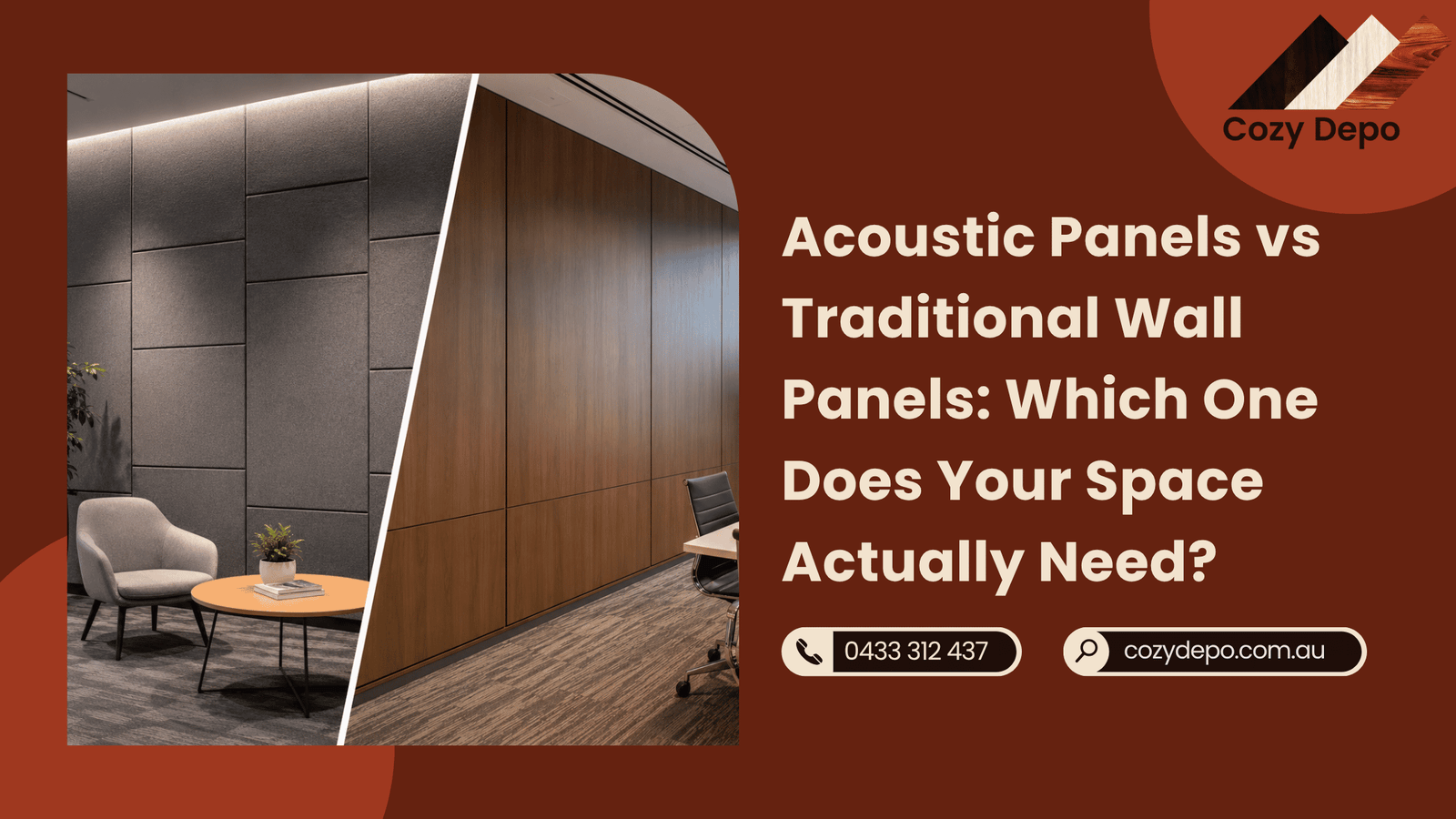
If you’ve been searching for wall panels lately, you’ve probably noticed there are two very different types sitting in the same category, acoustic panels and traditional decorative wall panels. They look similar in product listings, but they do completely different jobs.
Here’s a simple breakdown to help you choose the right one for your space.
What Are Acoustic Panels?
Acoustic panels are made to control sound. They are there to soak up echo, reduce noise and improve the general sound quality of a room.
- Made of sound-absorbing materials such as foam, fiberglass or mineral wool
- Fabric wrapped to match the look of the room
- Come in flat panels, shaped tiles, or hanging baffles
- work well in rooms with lots of hard surfaces such as timber floors, tall ceilings, concrete walls
- Custom acoustic panels allow you to select the precise size, shape, fabric colour and absorption rating for your space
Popular locations: home theaters, music rooms, podcasting studios, open plan offices, coffee shops, and kids’ playrooms.
What Are Traditional Wall Panels?
Traditional wall panels are purely decorative. They add texture, warmth, and a polished finish to a room but they don’t do anything meaningful for sound.
- Made of MDF, wood, PVC or plaster
- Common styles are shiplap, slat wall panels, wainscoting, and 3D wall tiles
- Only chosen for aesthetic reasons
- Easy to paint or coordinate with your existing décor scheme
- Generally less expensive upfront
Popular locations: living rooms, bedrooms, hallways, feature walls and commercial fit-outs.
Acoustic Panels vs Traditional Panels: Key Differences
| Feature | Acoustic Panels | Traditional Wall Panels |
| Sound Absorption | Yes | Very little to zero at all |
| Customisation | High — size, fabric, shape | Moderate — colour, finish |
| Best for | Noise-heavy or Areas requiring sound isolation | Visual improvements only |
| Installation | Wall-mounted or suspended | Wall-mounted or adhesive |
| Price range | Mid to High-end | Budget to medium |
Acoustic Panels vs Traditional Panels (Comparison in detail)
1. Purpose
Acoustic panels:
- Built-in sound management
- Less noise and echo.
- Listening and better concentration
- Boost your home theater and studio performance
Traditional panels:
- Designed for beauty
- Add texture, warmth & style
- Cover rough or tired walls
- Quick decorating fix
2. Sound Performance
This is where the two products are worlds apart.
Acoustic panels:
- Absorb sound waves rather than bouncing them
- Reduce background noise noticeably
- Improve voice clarity in offices and meeting rooms
- Make open-plan living areas significantly more comfortable
Traditional panels:
- Reflect sound, sometimes making echo worse
- Offer no meaningful acoustic benefit
- Not suitable where sound quality matters
For modern Australian homes with polished floors and high ceilings, untreated rooms can get very noisy. Acoustic treatment makes a real difference.
3. Appearance and Design Options
Acoustic panels have come a long way from plain grey foam squares.
Acoustic panels today offer the following:
- Timber-look and slatted finishes
- Fabric wrapping in custom colours
- Architectural and modern styles
- Full customisation with custom acoustic panels like custom sizes, brand colours, unique shapes
Traditional panels offer:
- Wood grain and stone-look textures
- PVC patterns and decorative laminates
- A wider range of purely decorative finishes
Traditional panels still lead on sheer decorative variety but acoustic panels are closing that gap fast.
4. Room Comfort
Noise affects how comfortable a space feels more than most people realize.
Acoustic panels:
- Reduce distractions in home offices
- Create calmer, quieter environments
- Improve focus and productivity
- Make entertainment rooms genuinely enjoyable
Traditional panels:
- Improve how a room looks
- Do nothing for noise or acoustic comfort
As open-plan living and work-from-home setups grow across Australia, acoustic comfort is becoming just as important as visual style.
5. Installation
Acoustic panels:
- Attached to walls or hanging from ceilings
- Screws, glue or french cleats
- Professional installation recommended for larger areas
Traditional panels:
- Lightweight and easy to make
- Wide range of fixing systems available
- Faster to apply for easy jobs
When you need something quick and cheap, a budget DIY, then traditional panels win here.
6. Maintenance
Acoustic panels:
- Occasional light dusting
- Fabric panels benefit from a gentle vacuum
- Generally fuss-free long-term
Traditional panels:
- Wipe-clean surfaces
- Stain and mark resistant
- Very low upkeep overall
Traditional panels are slightly easier day-to-day.
7. Cost Comparison
Acoustic panels:
- High initial cost
- Comfort and performance on long run
- Custom options add cost but deliver specific results.
Traditional panels:
- More affordable
- great for cosmetic upgrades without a huge spend
If your goal is purely decorative, then traditional panels can save money, but if you need sound control, acoustic panels are worth every penny.
Which One Is Best for Australian Homes?
Go for acoustic panels if:
- Echo problems in open-plan spaces
- Regular calls to work from home
- Have a media room or home theater
- Run a music space, podcasting setup or studio
- Want a quieter, more peaceful office environment
Go for traditional panels if:
- Need a quick visual boost
- Renovations on a smaller budget
- No noise or echo problems
- feature wall for the bedroom/hallway is needed
For many Australians, the best option is to use both together: traditional panels where appearance is important and acoustic panels where sound is.
Can You Get Both in One Panel?
Yes, and this is where things get interesting.
Some manufacturers now make decorative acoustic panels that look like stylish wall art or fabric feature walls but actually absorb sound at the same time. These are a solid option if you want the room to look great and perform acoustically.
Fabric-wrapped acoustic panels in particular can be printed with patterns, matched to brand colours for commercial spaces, or designed to look like regular décor. Nobody walking into the room would know they’re functional.
What to Consider Before You Buy
Before ordering anything, ask yourself these quick questions:
- Is echo or noise the actual problem, or is it just a visual one? Be honest here — buying acoustic panels for a room with no sound issues is money you don’t need to spend.
- What’s the room’s purpose? Function should drive the choice.
- What’s your wall space? Acoustic panels can be sized exactly to your wall — no awkward gaps or mismatched tiles.
- What’s your budget? If funds are limited, prioritize the problem areas first — usually the wall opposite the primary sound source.
Final Word
Traditional wall panels and custom acoustic panels both belong in modern interiors — just in different rooms for different reasons. As Australian homes get more open-plan, noisier, and more multi-functional, acoustic treatment is shifting from a luxury to a genuine necessity.
Think about not just how your room looks but how it sounds. The right panel choice can make your space look better, feel better, and perform better every single day.
FAQs
Are acoustic panels worth their price?
Yes. Acoustic panels will help you block echoes and improve sound quality. They can also serve as decoration in the house.
Can acoustic panels look decorative?
Yes, you can get acoustic panels that replicate timber walls, slats, or even fabric.
Where can acoustic panels be installed?
Best in places like home theaters, offices, meeting halls, studies, and open plan living spaces.