
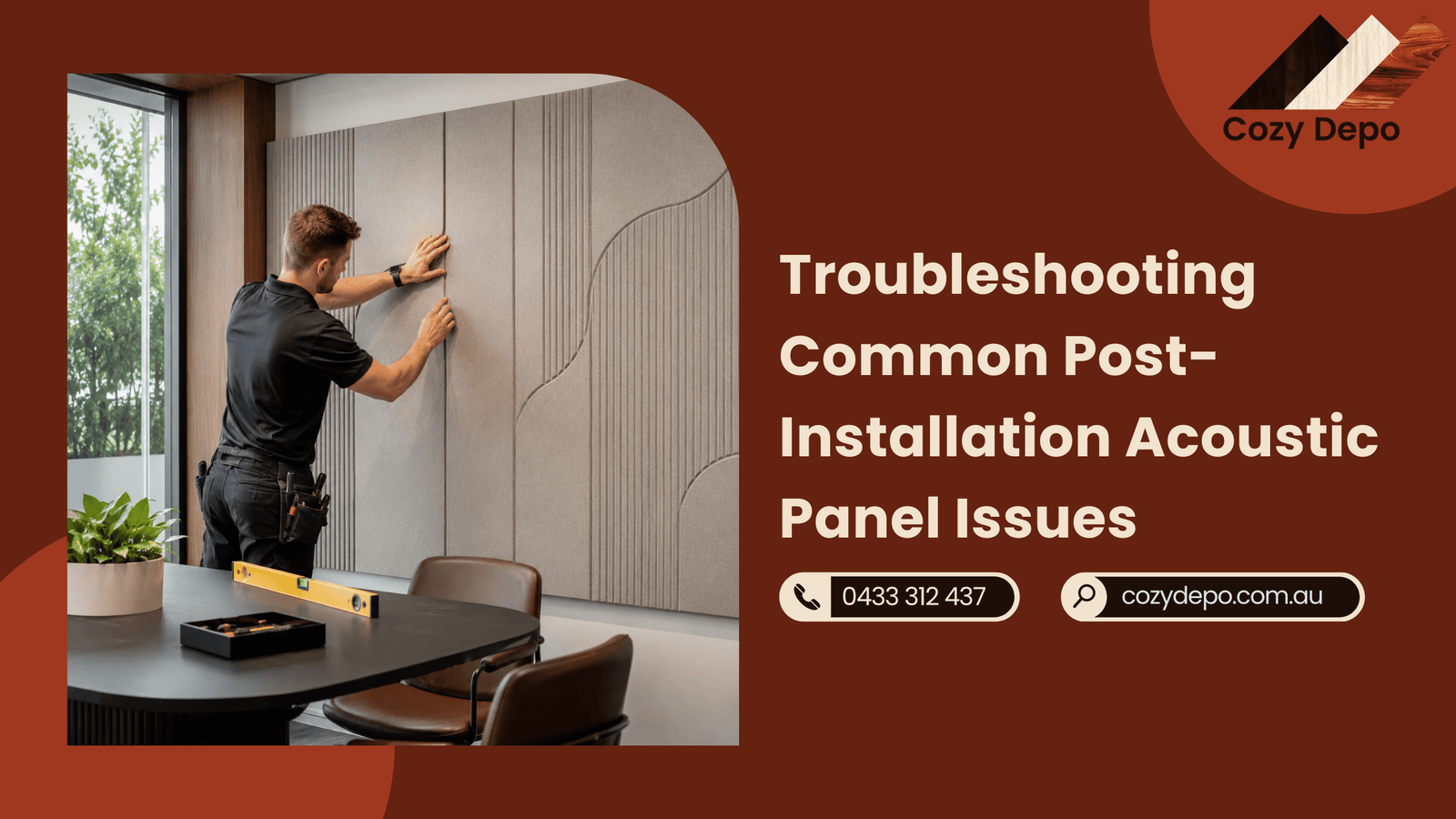
Acoustic panel installation is one of the most effective measures to improve sound quality and minimize noise in domestic houses, office buildings, recording studios, restaurants, and other commercial premises. But even when the installation has been carried out by professionals, problems can be developed due to changes in the surrounding environment or neglecting maintenance.
If you have just installed the acoustic panels or are going to order acoustic panel supplier Melbourne, knowing about possible post-installation problems will help you to preserve your investment and ensure good acoustics in the future.
This guide walks you through the most common problems, why they occur, and what you can do to fix them before they turn into bigger issues.
Why Panels Run Into Trouble After Installation
Acoustic panels absorb sound; they don’t block it so their performance leans heavily on how they’re fitted and looked after.
A few things tend to cause problems:
- Humidity swings
- Wrong adhesive
- Uneven walls
- Bad placement
- Everyday knocks
- Dust build-up
None of this means your panels are faulty. Most of it just needs a small fix.
The Problems People Run Into Most
1. Panels Coming Loose or Falling
This is the big one, and it’s rarely the panel’s fault.
Usual causes:
- Cheap adhesive
- Dusty wall
- Panel too heavy
- Moisture in the air
Fix it:
- Take the panel down
- Clean both surfaces
- Use proper adhesive or clips
- Add brackets for heavy panels
- Let it cure fully
2. Room Still Isn’t Quiet Enough
Panels reduce echo; they don’t make a room silent. If yours barely made a dent, coverage is usually the issue.
Common reasons:
- Not enough panels
- Wrong placement
- Bare reflective walls
- Panels too thin
What actually helps:
Target your problem spots first:
- Opposite walls
- Ceilings
- Meeting rooms
- Home studios
- Living areas
Mixing wall and ceiling panels makes a noticeable difference.
3. Panels Look Crooked or Uneven
Sound might be fine, but wonky panels are still annoying to look at.
Why it happens:
- Rushed measuring
- Uneven wall
- No layout plan
Fix:
- Use a spirit level
- Measure spacing properly
- Sketch a layout first
- Start from the centre
Fabric Wrinkles or Surface Marks
Fabric-wrapped panels sometimes wrinkle soon after going up.
Typically due to:
- Poor storage
- Moisture
- Harsh handling
Minor creases usually resolve themselves after a couple of days. If not:
- Consult manufacturer guidelines
- Change the cloth if required
- Do not use steamers unless recommended
Fading Colours Over Time
Panels near big windows tend to fade first.
Why:
- UV rays
- Sunlight
- Poor quality dye in material
How to prevent:
- Install curtains or shades
- Use UV window film
- Regularly rotate panels
- Choose UV-resistant material
Moisture Problems
The humidity levels in Australia vary widely across different regions.
Watch for:
- Swelling
- Warping
- Mould spots
- Musty smell
Prevent it:
- Control indoor humidity
- Fix leaks fast
- Improve ventilation
- Avoid unsuitable panels in wet rooms
Dust Making Panels Look Tired
Dust won’t wreck acoustic performance overnight, but it does make panels look older than they are.
Easy upkeep:
- Soft brush vacuum
- Microfibre dusting
- Spot-clean stains
- Avoid soaking fabric
Accidental Damage
Busy homes and offices bump into things; it happens.
Common culprits:
- Moving furniture
- Kids playing
- Office equipment
- Delivery trolleys
Small dents are often fixable. Badly damaged panels are usually better replaced than patched.
Tips for Keeping Panels Performing Well
- Check every six months
- Test mounting points
- Keep humidity steady
- Dust regularly
- Fix loose fixings early
- Don’t hang weight on panels
- Cover panels during renovations
Mistakes Worth Avoiding
- No acoustic plan
- Wrong adhesive
- Skipped wall prep
- All panels on one wall
- Ignoring acoustic ratings
- Skipping instructions
- Wrong panels in humid rooms
Planning ahead solves most of this before it starts.
When to Call a Professional
DIY works for most small fixes, but sometimes it’s worth getting help.
Call someone if:
- Panels keep falling
- Moisture keeps returning
- Sound barely improved
- Ceiling panels feel unstable
- It’s a large commercial job
Start With Better Panels
A lot of these headaches never happen if you start with quality gear from a trusted acoustic panel supplier Melbourne businesses actually rely on.
Look for suppliers offering:
- Installation guidance
- Strong mounting systems
- Commercial-grade materials
- Tested products
- Warranties
- Real support
Final Word
Most acoustic panel problems come down to small, fixable things: a wall that wasn’t cleaned properly, a panel placed in the wrong spot, or a bit of humidity doing its thing.
Working with a reliable acoustic panel supplier Melbourne homeowners and businesses actually recommend makes all of this far less likely in the first place.
If you’re planning a project or need help fixing what’s already up, the team at Cozydepo is happy to point you in the right direction.
FAQ
1. Why do my acoustic panels keep falling off?
Usually poor wall prep, weak adhesive, moisture, or a mismatch between panel weight and fixing type. An experienced acoustic panel supplier Melbourne can point you to the right system.
2. Do acoustic panels wear out over time?
Not really, if they’re installed properly and kept clean and dry, quality panels last for years.
3. Will acoustic panels fully soundproof my room?
No, they cut echo and sharpen sound clarity. True soundproofing needs insulation and structural changes too.
4. How frequently should I clean the panels?
It’s sufficient to dust off the panels every few weeks and vacuum them every two months.
5. Are panels movable after installation?
Yes, most of the panels can be moved around; however, you may have to use new adhesive or fasteners.